A website cannot generate enquiries or sales if the right people never find it. However, increasing website traffic is not simply about attracting the largest possible number of visitors. A local service business needs potential customers from the areas it covers, while an online retailer needs people actively interested in the products it sells.
The quality of your website traffic is therefore just as important as the volume. One hundred visitors who are genuinely considering your service can be far more valuable than thousands who leave within seconds.
The strongest results usually come from combining search engine optimisation, useful content, paid advertising, social media and a website that gives visitors a clear reason to stay.
Here are ten practical ways to attract more relevant traffic to your website.
1. Make sure every important service has its own page
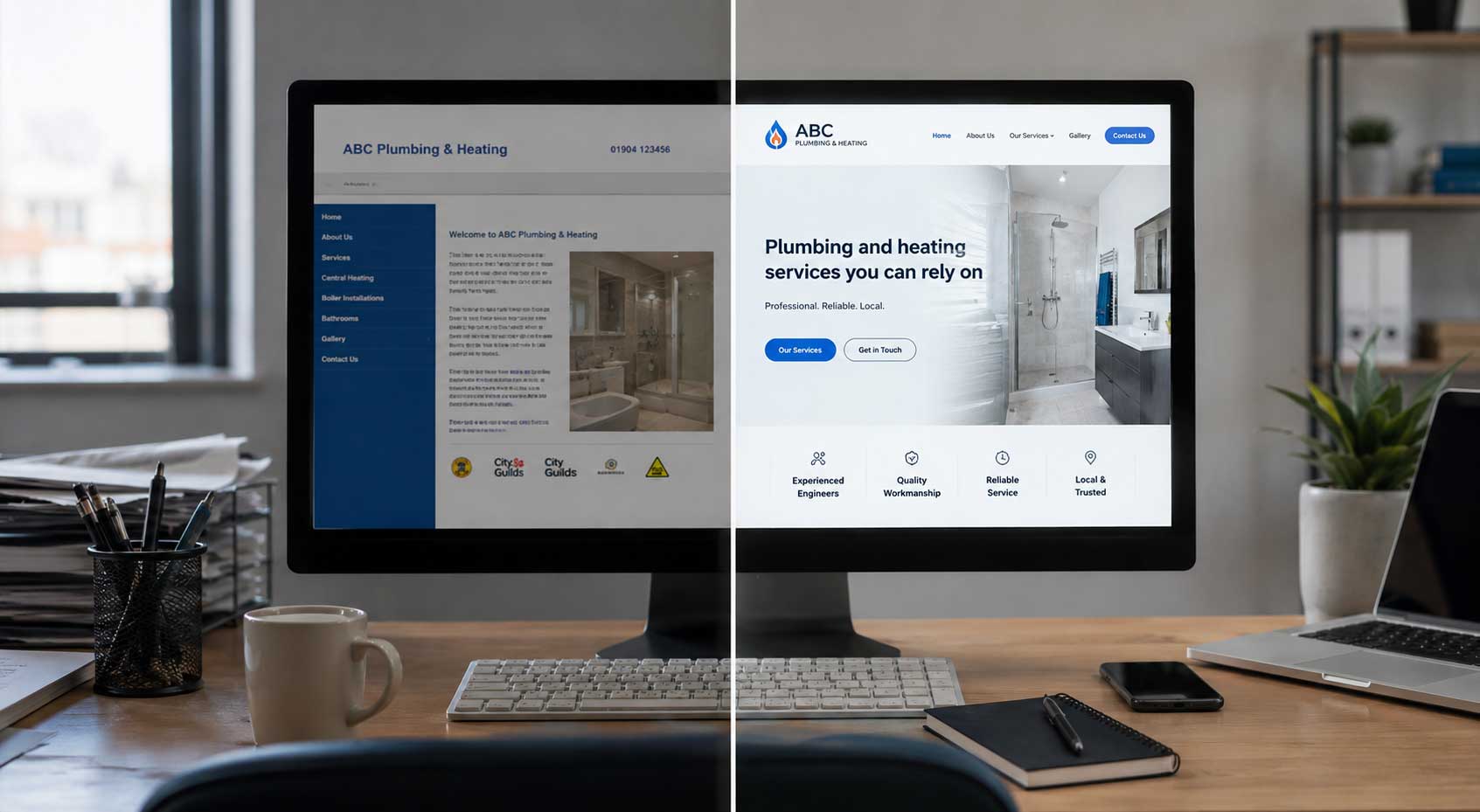
Many business websites try to cover every service on the homepage or place several unrelated services on one short page. This makes it difficult for search engines to understand what the business offers and gives potential customers very little useful information.
Each important service should normally have its own page.
For example, a heating company may need separate pages for boiler installations, boiler repairs, boiler servicing and general plumbing. A marketing business may need dedicated pages for website design, SEO, Google Ads and social media management.
A well-developed service page should explain:
- What the service includes.
- Who it is suitable for.
- The problems it solves.
- How the process works.
- The areas covered.
- Frequently asked questions.
- What the visitor should do next.
This creates more opportunities to appear for specific searches and allows visitors to land directly on the page most relevant to their needs.
2. Target the searches your customers actually use
Keyword research helps identify the words and phrases people enter into Google when looking for a product, service or answer.
The aim is not simply to target the phrase with the highest search volume. Broad keywords can attract large numbers of visitors who are unlikely to become customers.
More specific searches often show stronger intent.
For example:
- “Plumber” is very broad.
- “Emergency plumber in York” suggests an immediate local requirement.
- “Website design” could mean many things.
- “Small business website designer York” provides clearer context.
- “Boiler problems” may be an information search.
- “Boiler repair Easingwold” suggests someone looking for a service.
Your target phrases should reflect the services you most want to sell, the locations you cover and the questions customers ask before contacting you.
They can then guide your service pages, headings, page titles, blog topics and internal linking.
3. Improve your existing pages before creating dozens of new ones
Businesses often assume that increasing website traffic requires publishing something new every week. New content can help, but improving existing pages is frequently a better starting point.
An older service page may already have:
- Search impressions.
- Some Google rankings.
- External links.
- Internal links.
- Several years of history.
- Visitors arriving through long-tail searches.
Rewriting that page with clearer information, stronger headings, updated examples and better internal links may produce results more quickly than starting again with a new URL.
Review older pages for:
- Thin or outdated content.
- Weak page titles.
- Missing meta descriptions.
- Poor heading structures.
- Broken links.
- Old images.
- Services that are no longer accurate.
- Questions that have not been answered.
- Missing links to newer pages.
Older blog posts should also be reviewed. Useful URLs can be expanded and rewritten rather than automatically deleted.
4. Publish articles that answer genuine customer questions
A business blog should not exist simply because someone said regular blogging is good for SEO.
Each article should have a clear purpose. It might answer a common question, explain a service, help a customer make a decision or support an important page on the website.
Strong topics often come directly from customer conversations.
Think about the questions people ask by telephone, email or during meetings:
- How much does the service cost?
- How long will it take?
- What causes a particular problem?
- What should someone check before buying?
- What is the difference between two options?
- Can the issue be fixed without replacement?
- Which service is suitable for a particular situation?
- What happens during the first appointment?
Writing detailed answers to these questions can attract people during the research stage and introduce them to your business before they are ready to enquire.
Each article should link naturally to the most relevant service page, helping readers continue through the website.
5. Strengthen your local SEO
Local SEO is particularly important for businesses serving customers within specific towns, cities or counties.
Google needs consistent signals showing where the business is based, which areas it covers and which services it provides.
Useful local SEO work can include:
- Completing and regularly reviewing your Google Business Profile.
- Keeping the business name, address and telephone number consistent.
- Creating detailed local service pages.
- Collecting genuine customer reviews.
- Adding accurate service areas.
- Publishing locally relevant photographs.
- Linking between service pages and location pages.
- Building suitable local directory listings.
- Including useful local context within page content.
Location pages should not be copies of one another with only the place name changed. Each page needs distinct wording and information relevant to the service and area.
A business based near York might reasonably target York, Easingwold, Thirsk or Boroughbridge, but each page should provide something useful rather than repeating the same generic claims.
6. Use Google Ads for immediate visibility
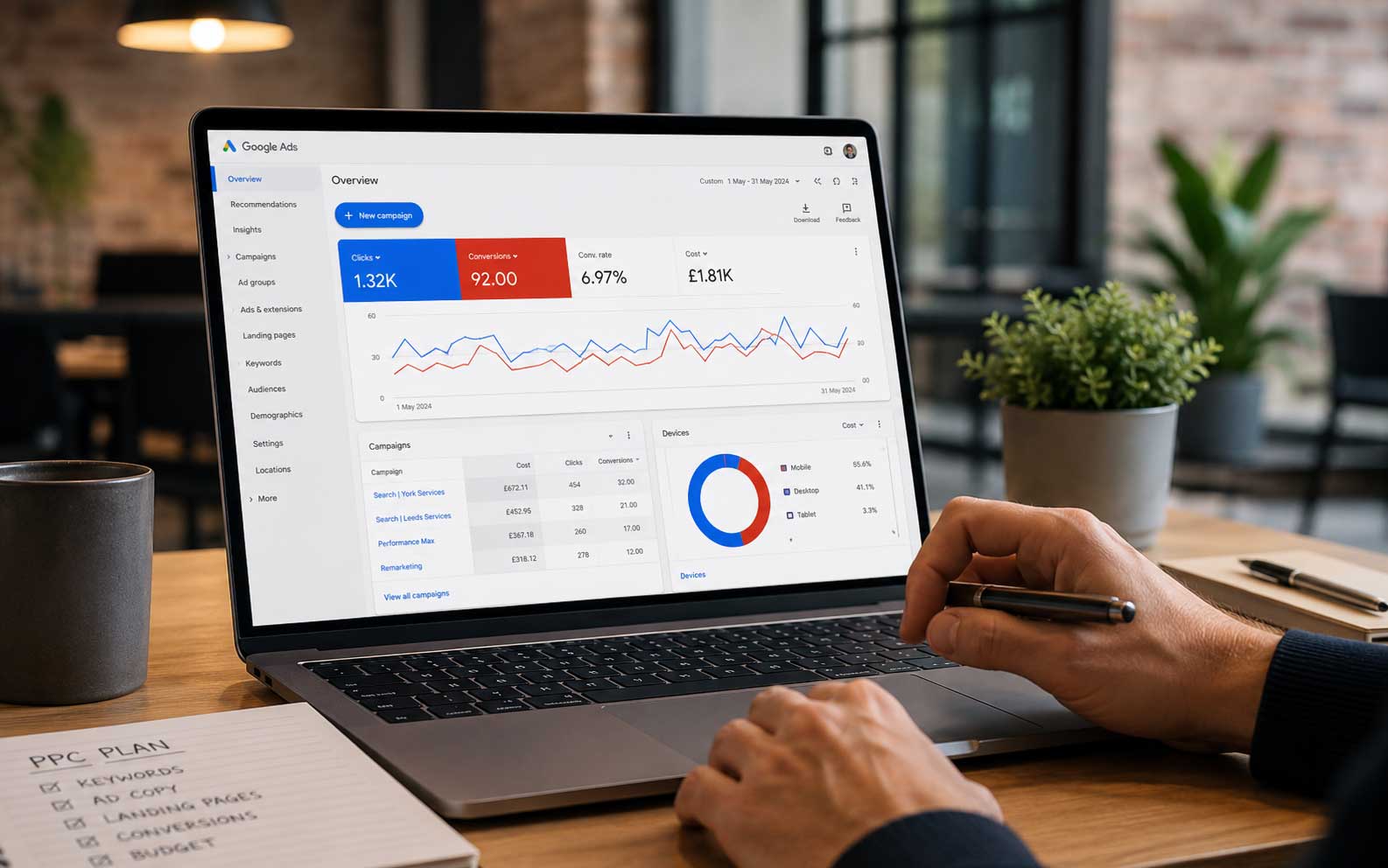
SEO can build a valuable source of traffic, but it usually requires time and consistent work. Google Ads can place a business near the top of the search results much sooner.
Paid search works particularly well when people are actively looking for a specific product or service.
A carefully managed campaign should include:
- Commercially relevant keywords.
- Suitable keyword match types.
- Negative keywords.
- Accurate location targeting.
- Separate campaigns for different services.
- Relevant advert copy.
- Dedicated landing pages.
- Telephone and form conversion tracking.
- Regular search-term reviews.
Sending every advert to the homepage is rarely the strongest approach. A person searching for a particular service should arrive on a page that directly addresses that requirement.
Campaign performance should be measured through enquiries, sales, cost per lead and return on advertising spend rather than clicks alone.
7. Improve your page titles and meta descriptions
Page titles and meta descriptions help users decide which result to choose when your website appears in Google.
A vague title such as “Services | Company Name” gives very little information. A clearer title can explain both the service and location.
For example:
Boiler Repairs in York | Simtec Heating
This immediately tells the searcher what the page covers.
A useful meta description should summarise the page naturally and give someone a reason to visit. It does not need to contain every possible keyword.
Review the titles and descriptions of:
- Main service pages.
- Location pages.
- Product categories.
- Important blog posts.
- The homepage.
- Project or case-study pages.
Improving click-through rates can bring more traffic from rankings the website already has, without first needing to move higher in the results.
8. Build a clearer internal linking structure
Internal links connect pages within your own website.
They help visitors find related information and help search engines understand how your services, locations and articles fit together.
A blog post about Google Ads could link to:
- Your PPC management page.
- A guide to landing pages.
- Your lead-generation service.
- A related article about conversion tracking.
A local website-design page could link to:
- The main website-design service.
- Relevant project pages.
- WordPress management.
- SEO services.
- The contact page.
Use descriptive link wording where it reads naturally. “Read about our SEO services in York” provides more context than “click here”.
Internal linking should be planned rather than added randomly. Your most important service pages should receive links from relevant articles and supporting pages throughout the site.
9. Share useful content through the right channels
Publishing an article does not mean people will automatically discover it.
New content can also be shared through suitable social media platforms, email newsletters and Google Business Profile posts.
The right channel depends on the audience.
LinkedIn may be suitable for business-to-business services, professional advice and company updates. Facebook can work well for local consumer services, community-focused businesses and practical advice. Pinterest can send traffic to product, interiors, craft and visual content. Email is useful for staying visible to existing customers and people who have already shown interest.
Avoid copying the same message onto every platform without adapting it.
A social post should give people a clear reason to read the article rather than merely announcing that a new blog has been published. Use a relevant image, explain the subject briefly and link to the full page where appropriate.
10. Use Search Console and analytics to guide future work
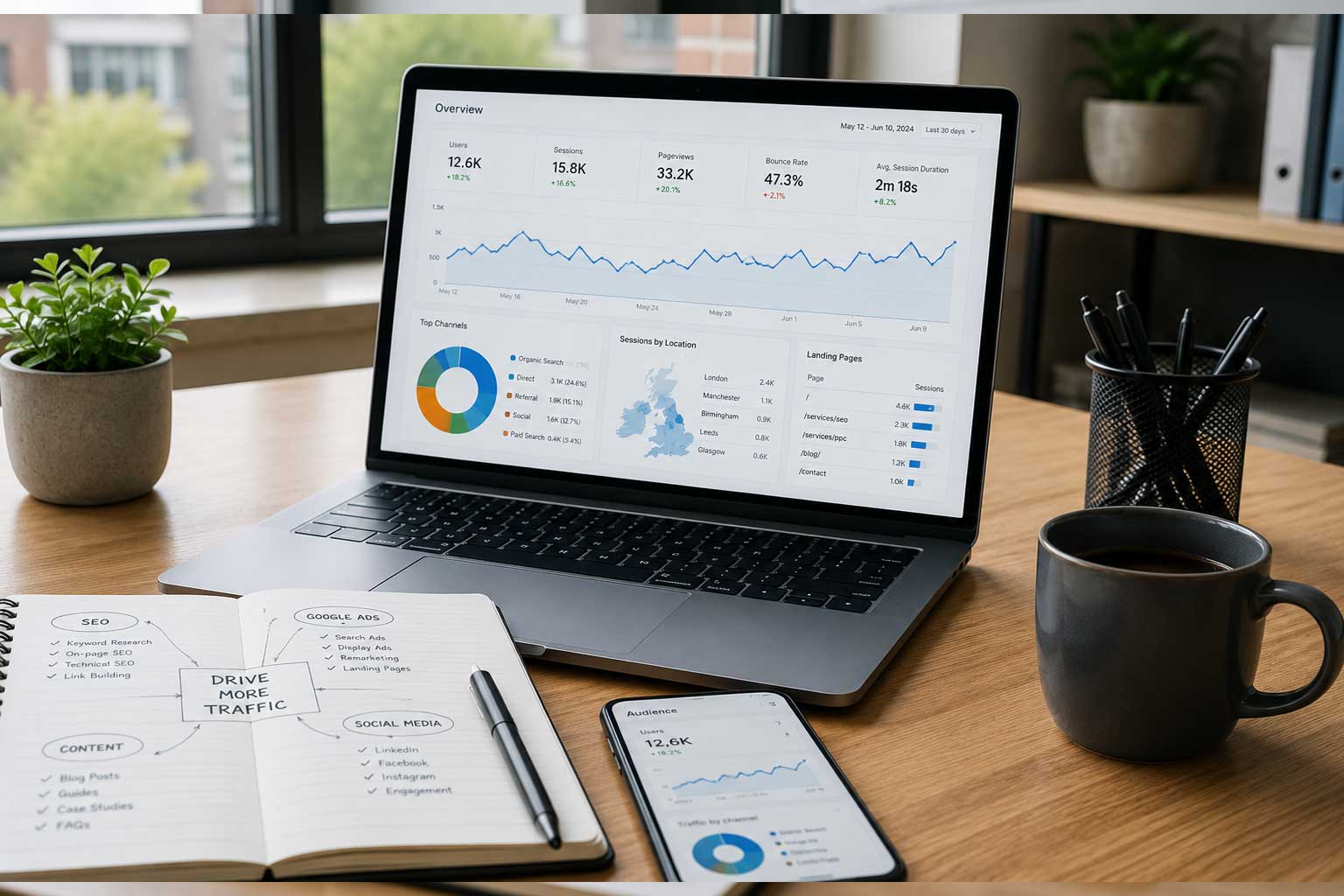
Website traffic should be monitored so that future improvements are based on evidence rather than guesswork.
Google Search Console can show:
- Which searches produce impressions.
- Which pages receive clicks.
- Average ranking positions.
- Click-through rates.
- Indexing problems.
- Pages gaining or losing visibility.
- Queries where the website is appearing but not yet receiving traffic.
Analytics can help show what visitors do after arriving, including which pages they view and whether they complete an enquiry or purchase.
Look for practical opportunities.
A page receiving many impressions but few clicks may need a stronger SEO title and meta description. A page ranking near the bottom of the first page may benefit from additional content and internal links. A blog post attracting visitors but no enquiries may need a clearer route to the relevant service.
The figures only become useful when they lead to action.
Focus on relevant traffic rather than impressive numbers
Higher website traffic is useful only when it supports the aims of the business.
A sudden increase caused by an irrelevant article or visitors from locations you do not serve may look positive in a report but produce no commercial benefit.
Useful website traffic should include people who are:
- Interested in your services or products.
- Located within the areas you cover.
- Looking for information connected with what you offer.
- Likely to return later.
- Able to become customers or recommend the business.
This is why traffic, rankings and impressions should be considered alongside enquiries, telephone calls, purchases and conversion rates.
How long does it take to increase website traffic?
The timescale depends on the method being used and the current condition of the website.
Google Ads can begin producing visits soon after a campaign launches. Social media and email can also create short-term increases when content is shared with an established audience.
SEO generally develops more gradually. Technical fixes and improvements to existing pages can sometimes show movement within weeks, while competitive services and newer websites may require several months of consistent work.
The strongest approach usually combines immediate methods with longer-term improvements. Paid advertising can provide visibility while SEO, content and local search work build a more sustainable source of visitors.
Frequently asked questions
What is the quickest way to increase website traffic?
Paid search advertising can generate relevant visits quickly, provided the targeting, adverts and landing pages are properly managed. SEO and content normally require more time.
Does blogging increase website traffic?
It can, but only when articles answer questions people genuinely search for and support the services the business provides. Publishing generic content without a clear purpose is unlikely to produce worthwhile results.
How often should a business publish new content?
There is no universal publishing schedule. Quality and relevance are more important than frequency. One detailed, useful article is generally more valuable than several thin posts.
Why is my website getting traffic but no enquiries?
Possible causes include irrelevant keywords, weak service pages, confusing navigation, poor mobile usability, unclear calls to action or an enquiry process that creates too much friction.
Can social media improve website traffic?
Yes, particularly when a business already has an active and relevant audience. Social activity should support the wider marketing strategy rather than being judged solely by likes or follower numbers.
Should I pay for website traffic?
Paid advertising can be worthwhile when the value of the enquiries or sales justifies the cost. Campaigns need accurate tracking so you can see which advertising produces a commercial return.
Attracting more visitors to your business website
Paragon Marketing helps businesses improve website traffic through SEO, Google Ads, content, local search and website development.
Our work focuses on attracting people who are genuinely interested in the services or products being offered, then improving the website so more of those visits become enquiries or sales.